
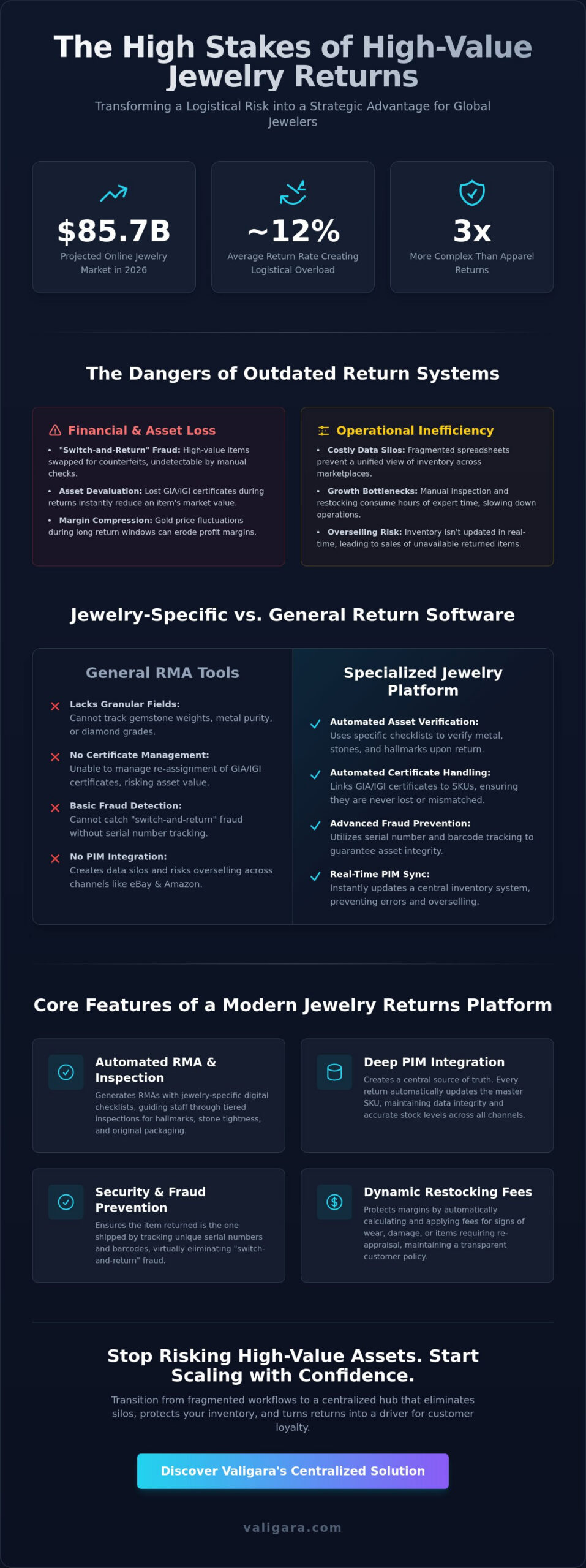
In high-end retail, a return isn’t just a shipping label; it’s a high-stakes asset transfer that demands absolute precision. With the global online jewelry market projected to reach $85.7 billion in 2026, managing an average return rate of nearly 12% across multiple platforms can quickly overwhelm manual workflows. If you’re still handling these transactions through fragmented spreadsheets, you’re risking “switch-and-return” fraud and costly data silos. Implementing specialized jewelry returns management software is the only way to maintain inventory integrity while scaling a global enterprise.
You already know that manual entry for high-value items is a bottleneck that stifles growth and invites error. This guide promises to show you how to transform these complex returns into a streamlined, secure, and customer-centric operation using specialized automation. We’ll examine how to centralize tracking across eBay and Amazon, automate GIA certificate re-assignment, and use precision data to turn a logistical headache into a driver for repeat high-ticket purchases.
Key Takeaways
- Understand why jewelry returns require a specialized approach to protect gemstone integrity and prevent “switch-and-return” fraud.
- Discover how jewelry returns management software automates RMA generation and synchronizes data with your PIM for real-time inventory accuracy.
- Compare the functional differences between general-purpose SaaS and jewelry-specific platforms to identify the best fit for multi-channel scaling.
- Learn to implement a tiered inspection process and specialized return policies that balance customer trust with rigorous asset protection.
- Transition from fragmented manual workflows to a centralized hub that eliminates operational silos and supports global business expansion.
The High Stakes of Jewelry Returns Management in 2026
In the luxury sector, jewelry returns management is far more than a simple shipping task. It represents a high-stakes intersection of logistics, security, and data integrity. While a clothing retailer might worry about a thread pull, a jeweler must verify the atomic reality of the asset. This is a specialized reverse logistics framework where every step must be documented to protect the bottom line. With the online jewelry market reaching $85.7 billion in 2026, the cost of a single error in this process can reach into the thousands of dollars.
Industry data suggests that jewelry returns are roughly 3x more complex than standard apparel returns. In fashion, the primary variables are size and style. In jewelry, the variables include metal purity, gemstone clarity, and hallmark verification. This complexity creates a dangerous “security gap.” Without dedicated jewelry returns management software, high-value items often vanish or are swapped for counterfeits during the return transit. This “switch-and-return” fraud is a growing threat that manual spreadsheets simply cannot catch. Beyond the immediate financial loss, poor return handling erodes your luxury brand reputation and destroys customer lifetime value.
Why Standard RMA Tools Fall Short for Jewelers
Generic return apps are built for t-shirts, not 18k gold. They lack the technical fields required to track gemstone weights, metal hallmarks, or specific diamond cut grades. Most importantly, standard tools cannot manage the reassignment of unique GIA or IGI certificates. If a certificate is lost or separated from its stone during a return, the asset’s value drops instantly. Furthermore, standard tools ignore the financial risk of gold price fluctuations. A return window that stays open too long during a market dip can lead to significant margin compression that generic software isn’t designed to track.
The Cost of Inefficiency: Beyond the Shipping Label
The true cost of inefficient returns is often hidden in labor. Manual inspection and restocking processes for high-value items take hours of expert time. When these workflows are slow, they kill the “post-purchase high” that keeps luxury clients coming back. A delayed refund or a lack of transparency during the inspection phase can turn a loyal buyer into a vocal critic. Additionally, fragmented return data creates a “return silo.” If your jewelry returns management software isn’t synced with your multi-channel inventory, you risk overselling items that are currently sitting in a return box waiting for inspection, leading to canceled orders and marketplace penalties.
Core Features of Modern Jewelry Returns Software
The Returns Management Software Market is evolving as retailers move away from manual spreadsheets. For jewelers, this shift is critical. Effective jewelry returns management software doesn’t just print labels; it acts as an automated gatekeeper that enforces technical standards before a refund is processed. It must handle the granular details of luxury assets, from metal purity to gemstone carats, without requiring constant human oversight.
Automated RMA generation in this niche requires jewelry-specific inspection checklists. These digital forms guide your team through verifying stone tightness, checking for hallmarks, and confirming the presence of original packaging. Dynamic restocking fees also play a vital role. If a returned piece shows signs of wear or requires a fresh appraisal, the system should calculate and deduct these costs automatically. This protects your margins while maintaining a transparent policy for the buyer.
Data Integrity: Linking Returns to the PIM
Jewelry PIM integration is the backbone of secure returns. Every return must automatically update the central source of truth for that specific SKU to maintain inventory accuracy across all channels. This level of synchronization prevents “variation drift.” For instance, it ensures a 14K gold ring isn’t accidentally restocked as a 10K version due to a clerical error. When the return software speaks directly to your product information management system, the technical specifications remain consistent from the first listing to the final restocking. Managing these complexities is easier when you use a specialized jewelry inventory system that connects every return to your broader sales strategy.
Security and Fraud Prevention Protocols
Fraud prevention is a primary driver for adopting specialized software. Modern systems utilize serial number and barcode tracking to ensure the piece coming back is the exact one that left the vault. Requiring customers to upload high-resolution images of the jewelry and its accompanying GIA or IGI certificates before issuing a label creates a digital paper trail. This discourages “switch-and-return” attempts. Additionally, by leveraging integrated Jewelry CRM data, the software can flag high-risk return patterns. If a specific account shows a history of returning high-value items in damaged condition, the system can trigger a manual review or adjust the return eligibility automatically.
Jewelry-Specific vs. General Return Software: A Comparison
Choosing the right jewelry returns management software is a strategic decision that dictates your long-term scalability. General SaaS return tools often provide a polished user interface but fail when confronted with the technical nuances of high-value assets. According to official U.S. Census Bureau data, the jewelry retail sector moves billions in monthly volume, yet much of this value is frequently managed through systems that can’t distinguish between a lab-grown diamond and a natural stone. If your software treats a sapphire necklace the same way it treats a cotton t-shirt, your data integrity is at risk.
Generalist tools focus almost exclusively on the shipping label and the customer notification. They don’t understand gemstone clarity, metal hallmark verification, or the necessity of linking a return to a specific GIA certificate. Jewelry-specific platforms are built to handle these precise data points from the ground up. They allow for deep diamond and gemstone data handling, ensuring that every returned item is verified against its original listing specifications. For businesses scaling across multiple marketplaces, robust API access is non-negotiable. It allows the return hub to communicate with custom front-ends and internal accounting tools without manual data transfers.
The Agility of SaaS vs. Legacy ERP Systems
Modern jewelers are rapidly abandoning rigid, on-premise legacy ERPs. These systems often require significant IT overhead and lack the flexibility to integrate with modern marketplaces like Etsy or Amazon. Cloud-based SaaS solutions offer real-time stock synchronization, which is vital for preventing overselling. When a return is initiated, a specialized SaaS platform updates your global inventory immediately. This allows the item to be resold the moment it passes inspection. This agility reduces the time capital is tied up in inventory that is returned but not yet listed. Specialized jewelry e-commerce software manages these transitions with a level of precision that legacy systems simply can’t match.
Total Cost of Ownership (TCO) Analysis
Evaluating TCO requires looking past the monthly subscription fee. While generalist tools might seem cheaper initially, their hidden costs are substantial. Manual workarounds for missing jewelry fields and the inevitable data errors lead to labor-intensive corrections. Specialized jewelry returns management software eliminates these inefficiencies through automated workflows. It pays for itself by reducing the labor cost of manual inspection and preventing fraud through rigorous verification protocols. By accelerating the resale of high-value items, jewelry-specific automation ensures that your capital remains fluid and your margins stay protected from the friction of manual processing.
Best Practices for Streamlining Your Jewelry Return Workflow
A precision-engineered return policy is a legal and operational shield for your brand. In the luxury sector, your policy must clearly outline requirements for original GIA certificates, security tags, and pristine packaging. Implementing jewelry returns management software allows you to enforce these rules automatically at the point of request. This ensures that every client understands their responsibilities before a high-value label is even generated. By setting these boundaries, you build trust with legitimate buyers while deterring those looking for loopholes.
Effective workflows also rely on automated, transparent communication. Luxury clients expect to be informed the moment their asset is received and again when it passes technical inspection. This level of transparency reduces customer service inquiries and maintains the brand’s authoritative image. Beyond the individual transaction, you should leverage return data to identify patterns. If a specific gemstone ring has a 20% return rate due to “color mismatch,” it signals a need for better studio photography or more precise descriptive metadata in your PIM. This feedback loop is essential for reducing future return rates and protecting your long-term margins.
Creating a Frictionless Return Portal
Your return portal should be an extension of your boutique’s digital experience. It must maintain a high-end aesthetic while offering functional efficiency. For items under a certain value threshold, self-service portals provide the speed modern shoppers demand. However, for high-ticket pieces, a “white-glove” approval process is often necessary. This tiered approach allows your team to manually review photos of a $10,000 diamond necklace before authorizing the shipment. To retain revenue, many successful brands now offer incentives, such as a 10% bonus in store credit, to encourage exchanges over cash refunds. You can manage these complex workflows effortlessly using integrated jewelry CRM and inventory management tools that bridge the gap between sales and service.
The Inspection Protocol: Protecting Your Assets
The moment a return arrives, a standardized, tiered inspection protocol must begin. For high-value items, this involves verifying gemstone authenticity against the original certificate and checking for any signs of “wear and tear” or stone swapping. Your jewelry returns management software should guide the technician through a digital checklist, requiring photo evidence of hallmarks and stone settings. If an item is damaged or a “switch-and-return” attempt is detected, the system should automatically flag the order and halt the refund process. Finally, ensure your Jewelry CRM is updated to track these behaviors. Identifying “serial returners” or high-risk accounts allows you to adjust future marketing or shipping terms for those specific individuals, further insulating your business from avoidable loss.
The Valigara Edge: Centralizing Jewelry Returns and Growth
Valigara serves as the specialized brain of your operation, effectively dismantling the “return silo” that plagues fragmented systems. Most jewelry returns management software operates in isolation, but Valigara bridges the gap between your inventory, your sales channels, and your technical workshop. This integration ensures that a return is treated as an asset recovery rather than just a logistical expense. By housing your diamond and gemstone data within the same ecosystem that handles your RMAs, you maintain a continuous chain of custody for every high-value stone. This isn’t just about moving boxes; it’s about preserving the data integrity of your most valuable inventory.
Scaling a luxury brand requires more than just high-quality craftsmanship; it demands a robust infrastructure for automated order fulfillment and logistics. Valigara empowers jewelers to transition from manual, error-prone workflows to a streamlined global enterprise. When an item is returned, the system doesn’t just stop at the refund. It triggers a series of automated actions that prepare the item for resale, ensuring your capital isn’t locked in a box in the back office. This level of automation is essential for maintaining liquidity and protecting margins in a competitive marketplace where every minute of downtime costs money.
Seamless Multi-Channel Synchronization
Managing returns across Amazon, eBay, and Etsy simultaneously is a primary pain point for modern sellers. Valigara solves this by providing absolute synchronization. When a return is processed and the item passes inspection, your stock levels update automatically across every connected marketplace. You don’t have to log into multiple dashboards to adjust quantities or respond to inquiries. Centralized messaging allows your team to handle return-related communication from all channels in one secure hub, ensuring a consistent luxury experience for every client. This precision is why Multi-channel Listing Automation is the foundation of a successful, scalable jewelry business.
Analytics for Business Intelligence
Data is the most powerful tool for reducing future losses. Valigara Insights allows you to identify “problem products” that suffer from unusually high return rates. Often, these returns are driven by data inaccuracies or poor photography rather than product defects. By pinpointing these trends, you can optimize your listings and refine your return policy for maximum profitability. Use these granular analytics to determine which items require a tiered inspection process and which can be handled through faster, automated channels. To experience the power of a system built specifically for the jewelry trade, book a demo to see Valigara’s return management in action and take control of your reverse logistics today.
Secure Your Margins Through Automated Asset Recovery
Transitioning from manual, fragmented workflows to a centralized system is no longer optional for the scaling jeweler. By implementing specialized jewelry returns management software, you protect your business against fraud while maintaining the absolute integrity of your technical data. This guide has demonstrated how precision automation turns the complexity of gemstone certificates and multi-channel synchronization into a repeatable, secure workflow that supports your long-term growth.
Valigara provides the industry-specific diamond and gemstone data handling required to manage high-stakes assets with absolute confidence. Since 2009, jewelry manufacturers have trusted our platform to deliver real-time multi-channel stock synchronization and eliminate the operational silos that stall expansion. It’s time to move beyond the limitations of generalist tools and embrace a solution designed for the unique demands of the luxury trade. Your path from manual labor to a streamlined, global enterprise starts with the right intelligence at the core of your operation.
Scale your brand with Valigara’s specialized jewelry management platform and transform your reverse logistics into a competitive advantage today.
Frequently Asked Questions
How does jewelry returns management software prevent fraud?
Specialized software prevents “switch-and-return” fraud by requiring customers to upload high-resolution images of the item and its hallmark before a label is issued. It utilizes serial number and barcode tracking to ensure the exact asset sent is the one being returned. These digital safeguards create a forensic paper trail that generalist tools lack, protecting your high-value inventory from sophisticated theft attempts.
Can I use general return software like Loop or Returnly for my jewelry brand?
You can use generalist apps, but they often fail to handle the technical specifications of luxury assets. They lack specialized fields for gemstone carats, metal purity, and GIA certificate tracking. For brands scaling high-value inventory, jewelry returns management software is necessary to prevent data silos and avoid the manual entry errors that occur with generic restocking tools.
What is the difference between an RMA and a return label?
An RMA is the formal authorization and tracking number that links a return to your inventory system, while the return label is simply the carrier’s transport document. Professional software ensures that a label is never generated until the RMA data is verified. This process includes confirming certificate numbers and reviewing item photos to ensure the return meets your brand’s strict security standards.
How do I handle diamond certificates during the return process?
The software handles certificates by linking the original grading report to the specific SKU throughout the return journey. It prompts the customer to include the original GIA or IGI document and requires a mandatory inspection step to verify its presence upon receipt. This integration prevents the significant loss of value that occurs when high-end stones and their reports are separated.
Will return software integrate with my eBay and Etsy stores?
Professional jewelry returns management software centralizes return requests from eBay, Etsy, and Amazon into a single, authoritative dashboard. This allows your team to handle inquiries and process refunds without logging into multiple marketplace accounts manually. It also ensures that your global inventory levels update automatically across all platforms once a returned item passes its technical inspection.
How much does specialized jewelry returns software cost in 2026?
Can I set different return policies for different jewelry collections?
You can set dynamic return policies based on specific collections, materials, or price points. For example, you might offer a self-service return for sterling silver pendants but require a “white-glove” manual approval for high-ticket diamond engagement rings. This flexibility allows you to offer customer convenience for lower-risk items while maintaining rigorous asset protection for your most valuable pieces.
Does the software help with international jewelry returns and customs?
Specialized software simplifies international logistics by automating the generation of customs declarations and commercial invoices. It helps you navigate complex VAT requirements and import duties that vary significantly by region. By centralizing these international data points, the software ensures your global returns remain compliant and cost-effective regardless of the customer’s jurisdiction.